
Why Are Used Car Prices Soaring in India? The Market Explained
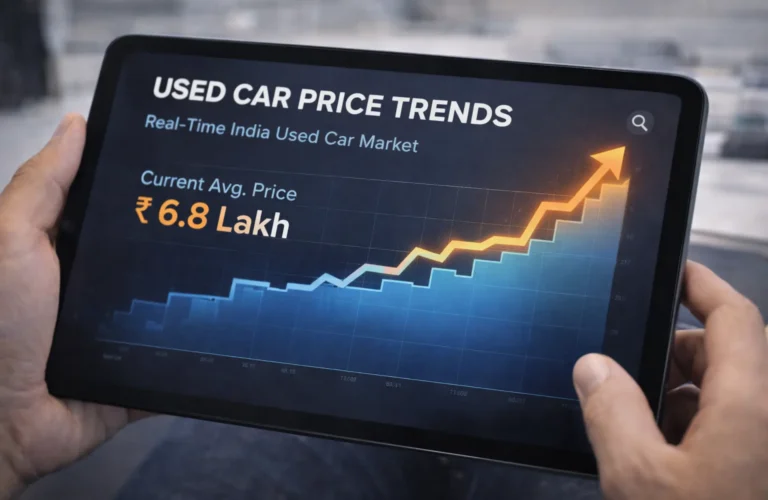
If you’ve checked the price of a 3-year-old hatchback or SUV lately, you might have done a double-take. The “deal” you were expecting feels more like a “premium.” In 2026, the Indian used car market is no longer a place for bargain hunters; it has become a high-stakes, high-value ecosystem. According to recent market insights, used car prices have reached an all-time high, with some popular models retaining nearly 85–90% of their original value even after three years.
The “Price Ceiling” Has Shifted
The most direct driver of soaring used car prices is the skyrocketing cost of new vehicles. As of January 2026, nearly every major automaker—from Maruti Suzuki to BMW—has implemented price hikes ranging from 3% to 6%.
When the price of a new top-end SUV jumps by ₹1.5 lakh overnight, the value of the “used” version of that same car automatically creeps upward. Buyers who find themselves priced out of the new car showroom immediately flood the pre-owned market, driving up demand and, consequently, the price.
Why “Instant” Is More Expensive Than “New”
In 2026, the biggest luxury isn’t a sunroof or ADAS—it’s immediate delivery. Popular SUVs still command waiting periods of 4 to 8 months. For a professional or a family that needs a car now, the pre-owned market is the only solution.
This “Immediate Gratification Premium” means that a 2025 model with 10,000 km on the clock might actually sell for close to its original invoice price simply because the buyer can drive it home today. In the automotive news, this is often called the “Wait-Time Flip,” where used inventory becomes more liquid than new stock.
The Trust Tax: The Organized Player Effect
Ten years ago, buying a used car was a gamble. Today, with the dominance of organized platforms like Spinny, Cars24, and Maruti True Value, that risk has vanished—but it comes at a cost.
These players offer 200-point inspections, warranties, and buy-back guarantees. While this has brought massive convenience to the Indian buyer, it has also “standardized” the market. The days of finding an uninformed seller and getting a “steal” are mostly over. These platforms use AI-driven pricing algorithms that ensure the seller gets a fair price, which naturally pushes the retail price for the buyer higher.
Aspirational Buying: The SUV Effect
The Indian buyer’s mindset has shifted from “How much does it cost?” to “How much car can I get for my budget?” A buyer with ₹12 lakh can either get a brand-new mid-spec hatchback or a 3-year-old, feature-loaded Compact SUV.
Pro Tip for Sellers:
If you own a well-maintained SUV (especially an automatic), you are sitting on a goldmine. The demand for 2–4 year old SUVs is at its highest point in a decade. If you plan to sell car online, 2026 is the year to do it to maximize your returns.
Is This the “New Normal”?
As India heads toward the 7 million units milestone in used car sales by the end of FY2026, the “soaring” prices are unlikely to drop significantly. The used car has transitioned from a “compromise” to a “smart financial move.” By avoiding the initial 20% depreciation “tax” of a new car and getting a vehicle that still feels modern, the Indian consumer is voting with their wallet.
The ease of selling cars online has created a transparent cycle where you can trade in your current vehicle and upgrade to a better one in a single weekend. While the prices are high, the liquidity and trust in the market have never been better.
