
The Rise of Hydrogen Cars: A Game Changer for India’s Green Future?
While battery electric vehicles (BEVs) are currently the talk of the town, a quieter but potentially more explosive revolution is brewing in the background. Hydrogen Fuel Cell Electric Vehicles (FCEVs) are emerging as a compelling alternative for those who want the environmental benefits of an electric drive without the long charging wait times. As India pushes toward its Net Zero targets, these market insights suggest that hydrogen could be the “missing piece” in the green mobility puzzle. For the modern urbanite, this technology represents the ultimate fusion of sustainability and traditional convenience.
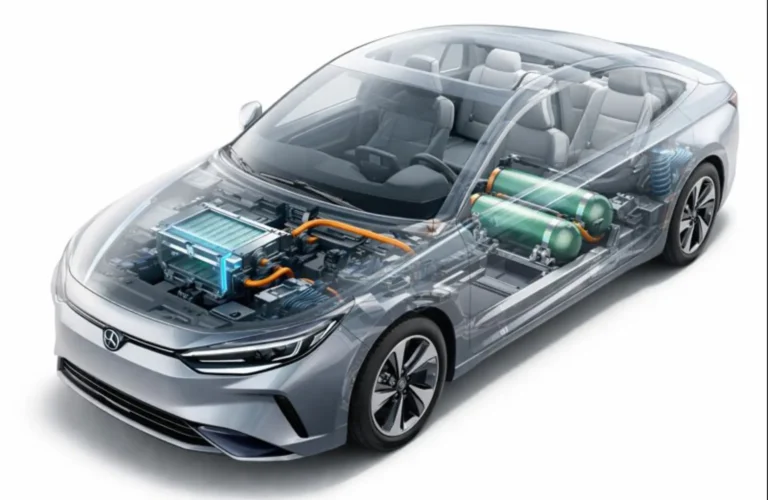
How Hydrogen Fuel Cells Redefine “Clean” Power
Unlike standard electric cars that store energy in large lithium-ion batteries, hydrogen cars generate their own electricity on board. By combining compressed hydrogen from a tank with oxygen from the air, a chemical reaction occurs in the fuel cell stack, producing electricity to power the motor. The only byproduct? Pure, clean water vapor from the exhaust.
This technology offers a massive advantage in terms of weight and refueling speed. While a large EV battery can weigh hundreds of kilograms and take hours to charge, a hydrogen tank can be filled in just 3 to 5 minutes—the same time it takes to fill a petrol tank. This makes FCEVs particularly attractive for heavy-duty applications and long-distance travel, where downtime is a major hurdle.
Building the Infrastructure for a Hydrogen Economy
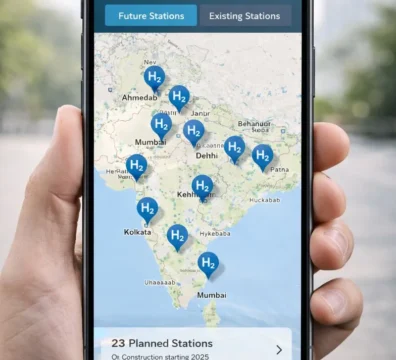
The real challenge for hydrogen in India isn’t the cars themselves, but where to fill them. Currently, the infrastructure is in its infancy, with only a few pilot stations in cities like Delhi and Faridabad. However, the government’s National Green Hydrogen Mission is set to change this. With massive investments aimed at making India a global hub for green hydrogen production, we are likely to see “hydrogen corridors” appearing on major highways by the end of the decade.
Current news highlights that major players like Toyota and Hyundai are already testing the waters with models like the Mirai and the Nexo on Indian soil. These vehicles are serving as rolling laboratories, helping engineers understand how fuel cells perform in India’s unique climate and traffic conditions.
Also Read: Making a Statement: Luxury Cars That Define Success in India.
Navigating the Future Resale Landscape
As with any emerging technology, the introduction of hydrogen cars will eventually shift the dynamics of the secondary market. Early adopters of FCEVs will likely see their vehicles hold a unique “niche” value. When the time comes to sell car online, having a vehicle that represents the absolute cutting edge of green tech will be a major differentiator.
Insights for Future Hydrogen Adopters:
- Refueling Proximity: Only consider an FCEV if you live or work near a planned hydrogen refueling hub.
- Range Expectations: Expect a range of 500–600 km, making it superior to many entry-level BEVs for inter-city travel.
- Maintenance: FCEVs have fewer moving parts than petrol cars but require specialized checks for the fuel cell stack and high-pressure tanks.
- Incentives: Keep an eye on state-specific green hydrogen policies that might offer road tax waivers or subsidies.
Want to also Sell you bike? Contact Genie Bikez.
Is it Time to Make the Switch?
For the average buyer today, a hybrid or a BEV remains the more practical choice due to the current abundance of charging points and service centers. However, for those looking at the long-term horizon, hydrogen is the technology to watch. The ability to sell car online and upgrade to the “next big thing” is a cycle that has defined the Indian market for decades, and hydrogen is poised to be the next major step in that evolution.
As the cost of “Green Hydrogen” (hydrogen produced using renewable energy) drops, the running costs of these vehicles will become highly competitive. We are moving toward a future where “range anxiety” is replaced by the simple, familiar habit of a five-minute pit stop. The journey toward a cleaner India is no longer just electric—it’s atmospheric.
